We use the word love a lot. “I love this iced tea.” “I loved that movie.” “Will you love me forever?” We sling it at everything from our grandmothers to a good grilled cheese sandwich. On the one hand, that’s fine: Scripture uses the word love a lot, too. But there’s a danger to casual usage—as we flippantly throw it around, we gradually reduce it to a trite symbol. (Like the “heart” we hit on that Instagram post or our passing recognition that we saw someone’s latest selfie.) When we dumb love down, our diminished definition becomes a far cry from God’s heartbeat for the world.
In Scripture, love is less a passive reaction and more an active action. Hesed is a Hebrew word often translated as “love.” It shows up 247 times in the Old Testament and is characterized by faithful action, steadfast presence, and sacrificial care. Its meaning is not so much “you make me feel good,” as it is “I’ll be with you through thick and thin.” It’s a word loaded with rich meaning that’s hard to translate into English, so let’s try to unpack it.

A Deep Well
The Lord is the foundation of love, hesed-style. In Exodus 34:1-35, a central passage of the Old Testament, God speaks His own name and tells us who He is. This is not someone else talking about God, but rather God describing Himself—a foundation we can build our lives upon. And at the center of His character? God says He is “abounding in love (hesed) and faithfulness” (Exodus 34:6 NIV, emphasis added). Like a spring of water rushing up from the depths, bursting forth, and splashing across the land, God is a deep well that brings life to the world. He abounds in hesed—it goes all the way down and flows far and wide.
In Scripture, God is praised for His hesed more than for any other attribute. Psalm 136:1-26 praises Him 26 times for this love that endures forever (NIV). In the rest of the psalms, the word shows up over a hundred more times. Throughout the Old Testament, God’s people echo His self-description—“abounding in love”—like a recurring refrain of worship. (See Neh. 9:17; Jonah 4:2; Lam. 3:22 NIV.)
Creation itself was founded on God’s hesed— (Psalm 136:5-10). It endures to a “thousandth generation” and unto forever (Deut. 7:9; Psalm 136:1-26), redeems the enslaved and oppressed, and is big enough to encompass all humanity, filling the earth (Psalm 33:5; Psalm 36:7).
Love in Action
God is the Faithful One who invites us to reflect His faithfulness by displaying loyal love to others (1 John 4:16). Indeed, God demands this of those who follow Him. He who is hesed personified wants His children to act like Him as we do justice, love mercy, and walk humbly (Micah 6:8).
Even when we’ve given ourselves over to other loves, God comes after us with a relentless, unbreakable love.
So this love is more than a feeling; it always involves concrete action on behalf of another. In Genesis 40:14, upon release from prison, the cupbearer is to show hesed by putting in a good word with Pharaoh about Joseph. Bethuel displays hesed by agreeing to give his daughter Rebekah in marriage (Gen. 24:49), and the Israelite army extends it to Rahab by sparing her family (Josh. 2:12-13).
Love is more than an emotion; as author Bob Goff says, “love does.” So we should picture this love as being less like the emotional flutterings of a teenager’s heart and more like the devotion of a woman who’s spent her life caring for a brother with Down syndrome—making meals, doing laundry, and singing sweetly over him as he goes to sleep.
God makes love concrete, with specific acts of faithfulness. He is regularly described as “doing,” “showing,” or “keeping” this loyal love to His people. Even when we’ve acted like a cheating spouse, worshipping idols and giving ourselves over to other loves, God comes after us with a relentless, unbreakable love (Hos. 2:18-20). He is faithful even when His people aren’t.
So God’s love is not “I want to use you to make myself feel happy” but, rather, “I want to give Myself to you to bring you happiness.”
Jesus’ Family Tree
Ruth and David, two of Jesus’ ancestors, give us powerful pictures of faithful love in action. In the story of Ruth, hesed shows up regularly. As an act of extravagant lovingkindness, Ruth leaves her homeland to move in with her national enemies and care for Naomi, her mother-in-law. Boaz the wealthy landowner treats Ruth and Naomi with overwhelming benevolence by providing for and protecting them. And Ruth lavishes kindness on Boaz when she forsakes younger, more strapping suitors to “propose” marriage to him (Ruth 1:8; Ruth 2:20; Ruth 3:10).
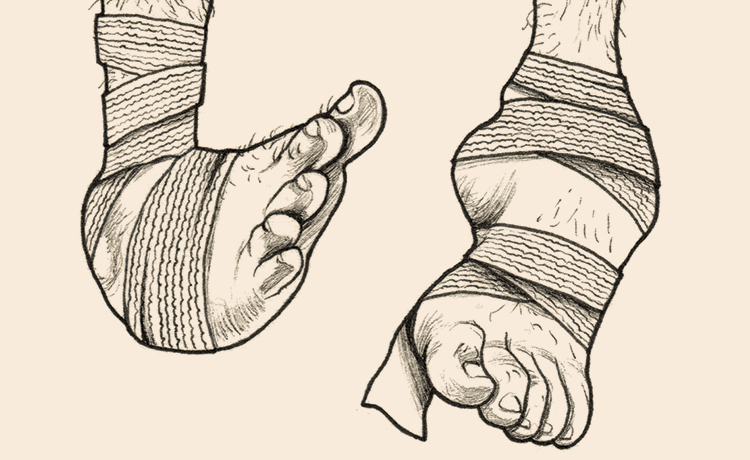
And David follows in his great-grandma Ruth’s footsteps. In an oath to his best friend, he swears upon his faithfulness (hesed) to their friendship that he will always show kindness to Jonathan’s family. Once he is established on the throne, David looks high and low for anyone from the family to whom he may keep his word and show “the hesed of God” (2 Sam. 9:3; 1 Samuel 20:14-17)—and this, despite the efforts of Jonathan’s father to kill David and set their clans against one another.
David discovers Jonathan’s son Mephibosheth living in a barren land. Crippled and unable to walk, he has lost everything and has nothing to bring to the table. But David acts with faithful love, restoring to Mephibosheth his once-royal family’s land and carrying him to the king’s dining room, where he eats with David’s family the rest of his days.
This is a picture of the gospel—one of many such pictures in the Old and New Testaments—where God’s heart for restoration is made plain. Though mankind has nothing to bring to King Jesus’ table, and though we stand in Adam’s family line that has warred against God’s kingdom, we are nonetheless brought home by Christ to celebrate in the victory of His unfailing love—His hesed—and feast with Him forever.
Illustrations by Adam Cruft